
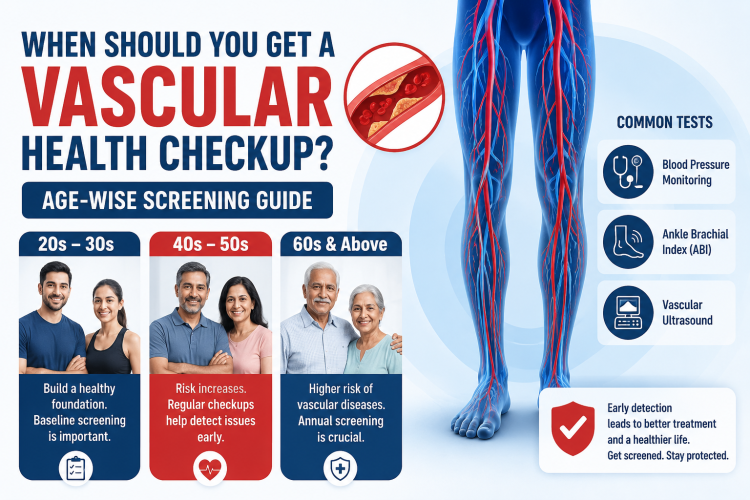
With age, vascular screening plays a crucial role in maintaining your vascular health. Although older adults over 60 years are prone to vascular diseases, people of every age must go for a screening or regular checkup to prevent and receive early treatment. Vascular diseases can be fatal. Therefore, you should not overlook the symptoms and take the first step towards maintaining your vascular health by seeing a professional vascular specialist in Delhi.
In this guide, we will let you know the importance of vascular screening for different age groups. Also, know the different types of vascular screening and why it matters.
Age-Wise Vascular Screening Guide
Vascular screening is used to assess your vascular health. Begin the screen as the baseline in your 20s, with the frequency increasing in your 40s and 50s. The main areas include lipid profile, blood pressure, and blood sugar, especially if you have a family history of heart disease, smoking, and obesity.
Vascular Screening in Your 20s and 30s
Although vascular diseases are less common at this stage but not impossible. Hence, you should consider doing vascular screening in your 20s and 30s to establish a baseline. Go for blood pressure checkups every year and lipid profiles every 2-3 years. Also, check for obesity and diabetes. People who have a family history of vascular disease, obesity, a long-sitting job, or a sedentary lifestyle must do regular vascular screening.
Vascular Screening in your 40s and 50s
This is the time when your risk increases. Hence, you should focus on regular checkups. You should be aware of the common symptoms, such as leg pain while walking, numbness or cold feet, and visible veins. We recommend tests, including ABI (Ankle-Brachial Index), lipid profiles, blood pressure, and blood sugar levels.
Vascular Screening in your 60s
Vascular health checkups become crucial for people in their 60s. People at this age are more prone to conditions of vascular diseases, and it can significantly affect their quality of life. Hence, annual screening for blood pressure, regular blood flow, diabetes, and cholesterol is essential. You will also have to pay attention to symptoms, like persistent leg pains, swelling, and non-healing wounds. Tests will help you detect the issues early, which can prevent severe complications like ulcers and gangrene.
Types of Vascular Screening
Different types of vascular screening can be used to assess your vascular health. Every test has its own importance as it provides different insights into your circulatory system. But we will talk about the common types utilised for routine screening:
- Blood Pressure Monitoring: Measurements of your blood pressure are the fundamentals of monitoring your vascular health. It is the simplest yet one of the best ways to track your heart and vascular health. It helps in the early detection of hypertension even before the symptoms appear. High blood pressure indicates the potential risk of vascular diseases.
- Ankle Brachial Index (ABI): Another way to check your vascular health is through ABI, which is a non-invasive method to check the blood flow in your legs. This is done particularly to check the Peripheral Artery Diseases, which is a condition where narrowed arteries reduce the blood flow in the limbs.
- Vascular Ultrasound: It is also a screening tool to assess your vascular health. This is also a non-invasive imaging tool that uses high-frequency sound waves to create real-time images of the structure of your body. This helps in identifying blockages and abnormalities in your blood vessels.
Common Signs of Vascular Conditions You Should Never Ignore
Regular health screening for your vascular condition should begin at the age of 20. However, some people overlook its importance and wait until the severe symptoms appear. If you have never heard about vascular diseases and are worried about your condition, then pay attention to the following symptoms that are signs you must undergo vascular screening right away:
- Leg pain while walking or resting
- Swollen ankles or feet
- Bulging or twisted veins
- Skin discolouration
- Slow-healing wounds
These signs could be the early symptoms of vascular diseases. Even if you don’t experience them, regular screening is essential to prevent any severe condition in the future.
How Often Should You Get Checked
It depends on your condition. If you are a young adult in your 20s and 30s and have low risk, then you can get yourself checked in every 2-3 years. People with moderate risks, like those in their 40s, should get checked once a year. However, people with high risk, such as those in their 50s and 60s or smokers and diabetics, must get checked as per their doctor’s advice.
Why Vascular Screening is Important at Every Age
While you might think you don’t need vascular screening because you’re young, let us inform you that blood vessels begin to change much earlier than many people realise. So, it is not a concern only for older adults, but also for young adults. Besides, vascular conditions develop silently over the years. That’s why screening is important at every stage of life, and you shouldn’t wait for any symptoms to appear.
Here is why vascular screening at every age matters:
Vascular Diseases are Silent in the Beginning
Some conditions, such as Peripheral Artery Disease or Deep Vein Thrombosis, show no early symptoms. By the time you notice symptoms, such as pain, swelling, or visible veins, the condition may already be advanced and require vascular surgery. With vascular screening, you can detect the problem before it becomes serious.
Risk Factors Start Early
Your health is formed in your 20s and 30s. Unhealthy habits, like smoking, a sedentary lifestyle, and a poor diet, affect your overall health. At a young age, you may not find anything wrong with your health, but deep down, these unhealthy habits can damage your blood vessels. You may feel fine, but some health issues, like high cholesterol, fatty liver, poor circulation, and early plaque buildup, can begin silently. Early screening helps you know underlying issues so that you can correct your unhealthy lifestyle habits before permanent damage occurs.
Age Increases Risk
People over 50 are highly recommended for the vascular screening, because they are at higher risk of vascular diseases. Early intervention can prevent complications, as when you age, the vascular conditions become more common and severe too. Regular screening ensures that the age-related changes will be tracked and managed carefully.
Prevents Serious Complications
Vascular disease even leads to death worldwide. Hence, one should never overlook any symptoms and do regular screening before it becomes life-threatening. Untreated vascular conditions lead to severe health issues like stroke, non-healing wounds, heart attack, and chronic leg pain.
Helps Manage Existing Condition
Some health conditions, such as diabetes, high blood pressure, and obesity, significantly increase your risk of vascular diseases. Regular checkups help in screening your condition and how the diseases are affecting your blood vessels, and doctors recommend better treatment based on this.
Improves Quality of Life
Vascular conditions affect your blood circulation, which is important for your overall well-being. Blood circulation affects your mobility, energy levels, and overall organ function. Hence, it is important to do a vascular screening at every age to stay active and avoid long-term complications.
Final Words
Screening helps you detect the problem early and choose the right treatment. Early identification means less invasive and more successful treatments. In fact, this even lets your doctor explore more opportunities and implement preventive measures.
However, you must find a reliable and experienced vascular specialist who will help you diagnose the problem and prescribe the best treatment. You can ask your primary physician to recommend the best vascular surgeon in Delhi or nearby. They can refer you to a specialist in vascular diseases. But make sure to select the doctor whose expertise aligns with your specific health needs.
